
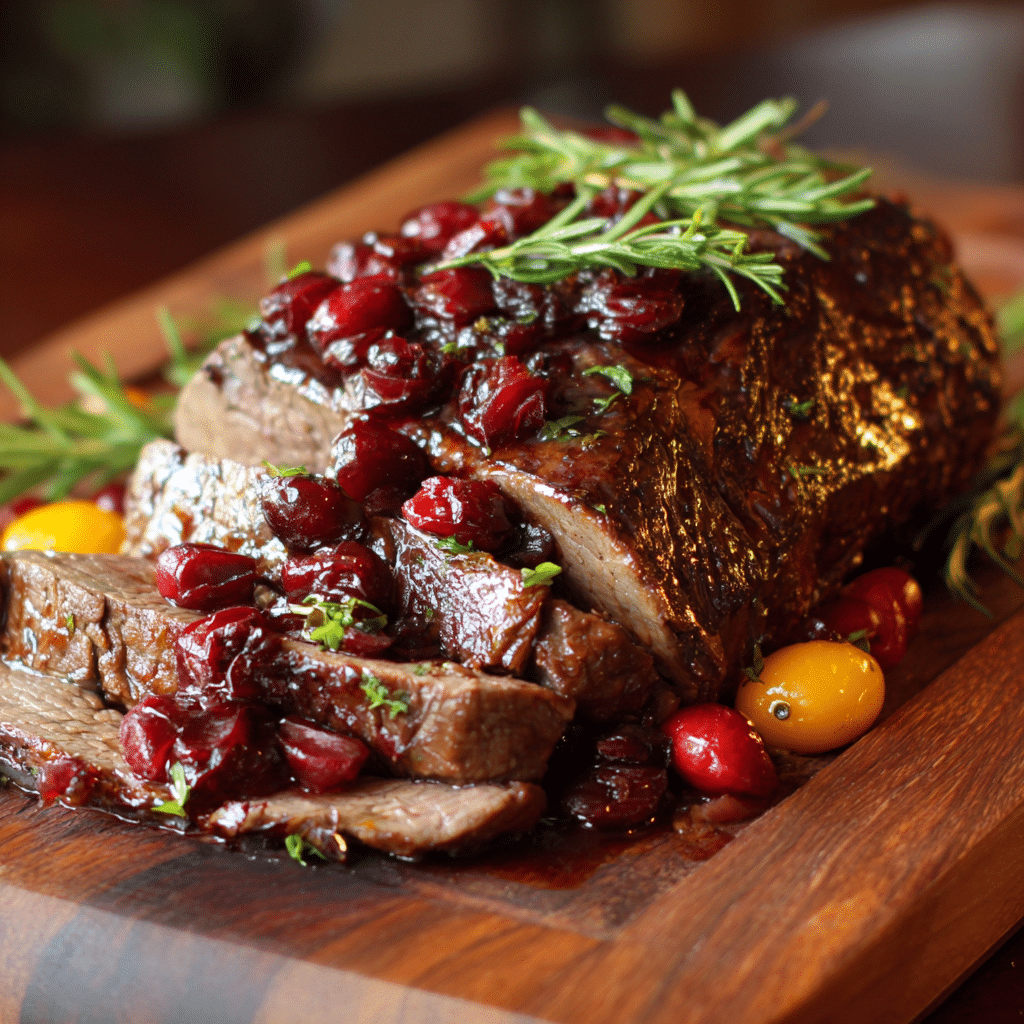
Cranberry Balsamic Roast Beef is the ultimate solution when you need an impressive centerpiece that looks and tastes like you spent all day in the kitchen but actually requires minimal hands-on time.
Tired of dry, overcooked roasts that disappoint guests and leave you stressed during holiday gatherings? This perfectly seasoned beef roast delivers tender, juicy slices with a stunning sweet-tart glaze that balances cranberry brightness against rich balsamic depth, creating restaurant-quality results that make you look like a culinary genius.
Hi, I’m Jack welcome to my kitchen! As the recipe developer behind Cooks Foody, I created this roast after years of experimenting with holiday beef dishes that often turned out either bland or dried out. What started as a quest to perfect my Christmas dinner centerpiece has evolved into the most-requested recipe in my collection, with readers telling me this Cranberry Balsamic Roast Beef has replaced traditional holiday roasts at their family tables because it delivers show-stopping flavor with foolproof technique.
This complete guide walks you through everything needed for roast perfection: why this sweet-savory combination works brilliantly, how to choose the right beef cut and quality grade, detailed cooking instructions with temperature guidance, professional tips for juicy results every time, creative variations for different occasions, elegant serving presentation ideas, and answers to common roasting questions. Let’s create a centerpiece that becomes your new holiday tradition!
Why This Cranberry Balsamic Roast Beef Recipe Works
This Cranberry Balsamic Roast Beef has earned its reputation as a holiday showstopper at Cooks Foody for several compelling reasons that solve common entertaining challenges:
- Sweet-tart glaze creates complex flavor without masking beef quality: The cranberry-balsamic combination enhances rather than overwhelms the natural beef taste. Cranberries provide fruity brightness while balsamic vinegar adds aged complexity and subtle sweetness that caramelizes beautifully during roasting, creating a glossy coating that tastes as impressive as it looks.
- Simple seasoning lets quality meat shine through: Unlike recipes with fifteen-ingredient rubs that muddy flavors, this Cranberry Balsamic Roast Beef uses strategic seasoning that highlights the beef while the glaze provides excitement. This restraint ensures your investment in quality meat pays off in pure, beefy satisfaction.
- Hands-off roasting frees you for other tasks: Once the roast enters the oven, it requires minimal attention beyond occasional basting. This approach lets you focus on side dishes, setting tables, or enjoying guests rather than hovering anxiously over the stove during the most hectic holiday moments.
- Make-ahead components reduce stress: Prepare the cranberry balsamic glaze up to three days in advance and season the roast the night before. This timeline flexibility transforms potentially overwhelming holiday cooking into manageable steps spread across multiple days.
- Leftovers remain delicious for sandwiches and salads: Unlike some roasts that dry out quickly, this Cranberry Balsamic Roast Beef stays moist for days in the refrigerator. Cold slices make incredible sandwiches while thin-sliced beef elevates salads, providing multiple meals from one impressive roast.
Choosing the Right Beef for Cranberry Balsamic Roast Beef
Quality beef selection makes the difference between good Cranberry Balsamic Roast Beef and extraordinary centerpieces that guests rave about for months. Here’s your comprehensive meat selection guide:
Best Cuts for This Recipe
Top sirloin roast delivers the ideal balance of flavor, tenderness, and affordability for this Cranberry Balsamic Roast Beef. This cut from the hip area provides beefy taste without the premium price of tenderloin while remaining tender enough to slice beautifully. Look for roasts weighing 3-5 pounds, which feed 6-10 people generously.
Ribeye roast (also called prime rib when bone-in) creates the most luxurious version with extensive marbling that bastes the meat from within during roasting. The extra fat content ensures moist, flavorful results that justify the higher cost for special occasions. Request the small end (ribs 10-12) for most consistent thickness.
Tenderloin (beef fillet) produces the most tender Cranberry Balsamic Roast Beef though it costs significantly more and has less beefy flavor than other cuts. Its uniform cylindrical shape cooks evenly, making it foolproof for nervous cooks. Tie it at 2-inch intervals to maintain shape during roasting.
Buying Tips
When shopping for Cranberry Balsamic Roast Beef, choose USDA Choice or Prime grade for best results. Prime offers more marbling (those white fat streaks throughout the meat) that creates juicier, more flavorful roasts, though Choice provides excellent quality at lower prices. Avoid Select grade which lacks sufficient fat for roasting methods.
Look for bright, cherry-red meat without brown or gray patches indicating oxidation or age. The surface should appear slightly moist but never slimy or sticky. Smell the meat through the packaging it should have a clean, fresh scent without any sour or ammonia notes.
Build relationships with butchers at quality meat counters who can source specific cuts, advise on current inventory quality, and custom-trim roasts to your specifications. Tell them you’re making Cranberry Balsamic Roast Beef for a special occasion and ask for their best recommendation based on current stock.
Substitutions
Need different cuts for your Cranberry Balsamic Roast Beef? Replace top sirloin with eye of round for a leaner, more economical option, though it requires more careful cooking to avoid dryness. Increase basting frequency and don’t cook past medium-rare for best results with this lean cut.
Tri-tip roast works beautifully with the cranberry balsamic glaze and costs less than most roasts while delivering excellent flavor. This triangular cut from the bottom sirloin cooks faster than larger roasts – reduce cooking time by about 30% and monitor temperature carefully.
For smaller gatherings, substitute a 2-pound beef tenderloin or thick-cut ribeye steaks (1.5-2 inches thick) using the same glaze and seasoning. Adjust cooking times to 25-35 minutes for tenderloin or 15-20 minutes for steaks, always using a meat thermometer for accuracy.
Ingredients & Prep for Cranberry Balsamic Roast Beef
Beef Preparation Essentials
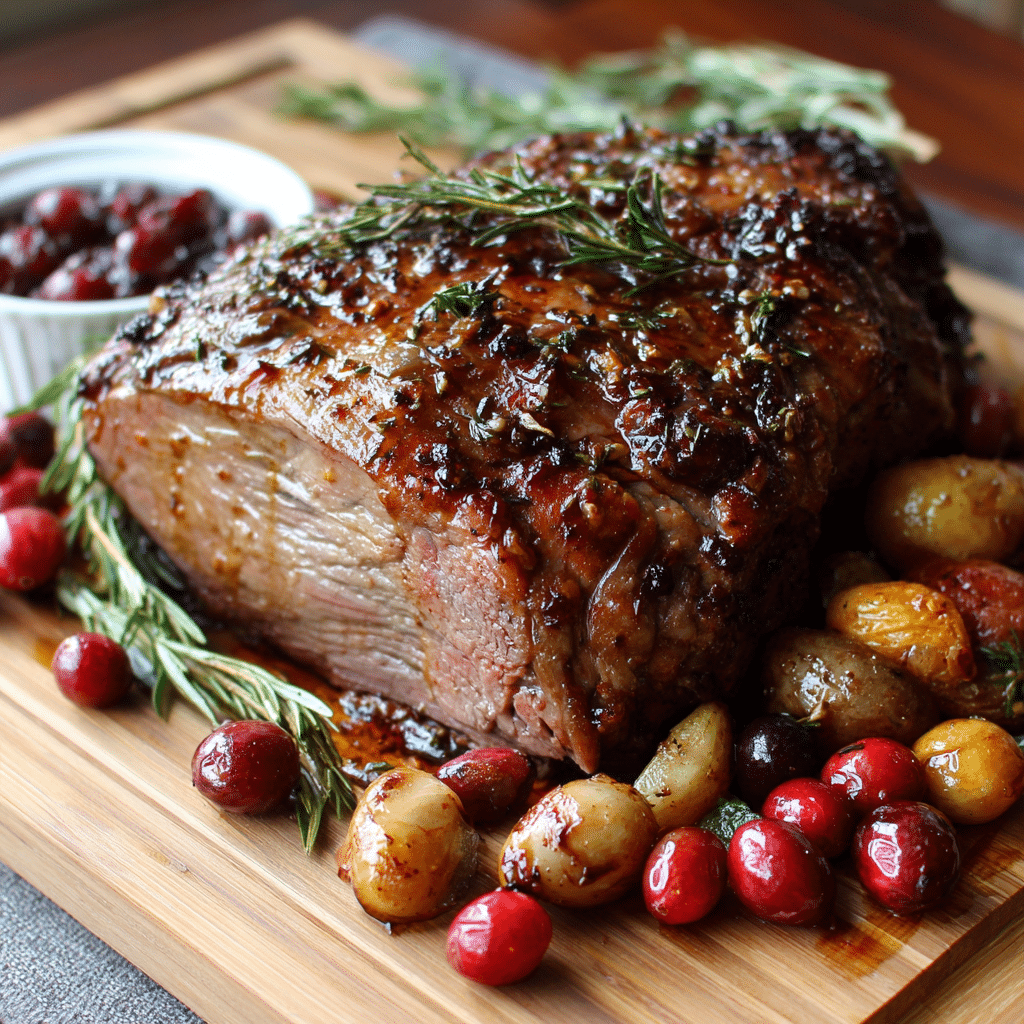
Before beginning your Cranberry Balsamic Roast Beef, proper meat preparation ensures even cooking and maximum flavor. Remove the roast from refrigeration 1-2 hours before cooking to bring it to room temperature. Cold meat straight from the fridge cooks unevenly, with overcooked exteriors and undercooked centers.
Pat the roast completely dry with paper towels, pressing firmly to absorb all surface moisture. Wet meat steams rather than sears, preventing the caramelized crust that locks in juices and creates complex flavor. This drying step takes 30 seconds but dramatically improves final results.
Trim excess fat cap to 1/4 inch thickness using a sharp knife. Some fat is necessary for flavor and moisture, but excessive fat prevents seasonings from adhering and creates smoke in your oven. Remove any silver skin (that tough, shiny connective tissue) which never softens during cooking.
Cranberry Balsamic Glaze Ingredients
- 2 cups fresh or frozen cranberries
- 1/2 cup balsamic vinegar
- 1/3 cup honey
- 2 tablespoons Dijon mustard
- 3 cloves garlic, minced
- 1 teaspoon fresh rosemary, minced
- 1/2 teaspoon black pepper
- 1/4 teaspoon salt
Roast Seasoning and Components
- 1 (3-5 pound) beef roast (top sirloin, ribeye, or tenderloin)
- 2 tablespoons olive oil
- 1 tablespoon coarse salt
- 1 tablespoon black pepper
- 2 teaspoons garlic powder
- 1 teaspoon dried thyme
- 1 teaspoon dried rosemary
Pantry Staples
Keep these basics on hand for Cranberry Balsamic Roast Beef and other roasted meats: quality olive oil for searing, coarse kosher salt for better adherence than table salt, whole black peppercorns for fresh-ground pepper, and dried herbs when fresh aren’t available. Additional useful items include butcher’s twine for tying roasts, a reliable meat thermometer, and aluminum foil for resting.
Store dried herbs in cool, dark places away from the stove where heat degrades them quickly. Replace dried herbs yearly for maximum potency. Keep balsamic vinegar in a cool cupboard where it maintains quality indefinitely – aged balsamic develops richer, sweeter notes worth the investment.
Step-by-Step Instructions for Making Cranberry Balsamic Roast Beef
Pre-Cooking Prep for Cranberry Balsamic Roast Beef
Start by making the cranberry balsamic glaze, which can be prepared up to 3 days ahead. In a medium saucepan over medium heat, combine cranberries, balsamic vinegar, honey, Dijon mustard, minced garlic, rosemary, pepper, and salt. Bring to a boil, then reduce heat to maintain a gentle simmer.
Cook for 15-20 minutes, stirring occasionally, until cranberries burst and the mixture thickens to syrup consistency. It should coat the back of a spoon without immediately running off. Remove from heat and let cool completely. For smoother glaze, blend with an immersion blender, though chunky texture looks rustic and appealing.
While glaze cools, prepare your Cranberry Balsamic Roast Beef for cooking. Pat the room-temperature roast completely dry with paper towels. In a small bowl, combine salt, pepper, garlic powder, dried thyme, and dried rosemary. Rub the entire roast with olive oil, then press the seasoning mixture onto all surfaces, coating evenly.
Searing Method for Cranberry Balsamic Roast Beef
Preheat your oven to 375°F and position the rack in the lower third for even heat circulation. While the oven heats, sear the roast to develop a flavorful crust. Heat a large oven-safe skillet or roasting pan over medium-high heat until very hot – test by dropping a water droplet that should immediately sizzle and evaporate.
Add the seasoned roast to the hot pan and sear without moving for 3-4 minutes until a deep brown crust forms. Using tongs, rotate the roast to sear all sides, about 12-15 minutes total. This crucial step develops hundreds of flavor compounds through the Maillard reaction while creating a barrier that helps retain juices.
Don’t skip searing even though it creates smoke and seems like extra work. The flavor development during this step is irreplaceable and worth the temporary kitchen haze. Open windows and turn on your ventilation fan to manage smoke.
Roasting Technique for Cranberry Balsamic Roast Beef
Once seared on all sides, brush the Cranberry Balsamic Roast Beef generously with about 1/3 of the prepared glaze, coating the entire surface. Reserve remaining glaze for basting and serving. If your skillet isn’t oven-safe, transfer the seared roast to a roasting pan fitted with a rack.
Place the roast in the preheated 375°F oven. Roast for 15-20 minutes per pound for medium-rare, though a meat thermometer is the only accurate way to determine doneness. Baste with additional glaze every 20 minutes, brushing it over the entire surface to build layers of sweet-tart flavor.
The roast is done when an instant-read thermometer inserted into the thickest part (not touching bone if using bone-in cuts) reads 130-135°F for medium-rare, 135-145°F for medium, or 145-155°F for medium-well. Remember that temperature rises 5-10 degrees during resting, so pull the roast slightly before your target temperature.
Checking Doneness in Cranberry Balsamic Roast Beef
Invest in a quality instant-read or probe thermometer it’s the only reliable way to achieve perfect results with your Cranberry Balsamic Roast Beef. Visual cues and timing charts provide estimates, but actual internal temperature guarantees success. Insert the thermometer into the center of the thickest part, avoiding fat pockets or bones that give false readings.
For medium-rare (the recommended doneness for most roasts), remove meat when it reaches 130-135°F. For medium, remove at 135-145°F. Beyond medium-well (155°F+), even quality cuts become dry and less tender. Most chefs recommend medium-rare to medium for optimal flavor and texture balance.
If you don’t have a thermometer, make a small cut into the thickest part of the roast. Medium-rare shows warm red center, medium displays warm pink center, and medium-well appears slightly pink. However, cutting releases precious juices, so a thermometer is strongly preferred.
Resting Your Cranberry Balsamic Roast Beef
Once the roast reaches proper temperature, remove it from the oven and tent loosely with aluminum foil. Let it rest for 15-20 minutes before slicing this crucial step allows juices to redistribute throughout the meat rather than flooding your cutting board when you slice.
During resting, the internal temperature rises another 5-10 degrees while muscle fibers relax and reabsorb moisture. Cutting too early results in dry meat regardless of perfect cooking, so resist temptation and use this time to finish side dishes or make pan gravy from drippings.
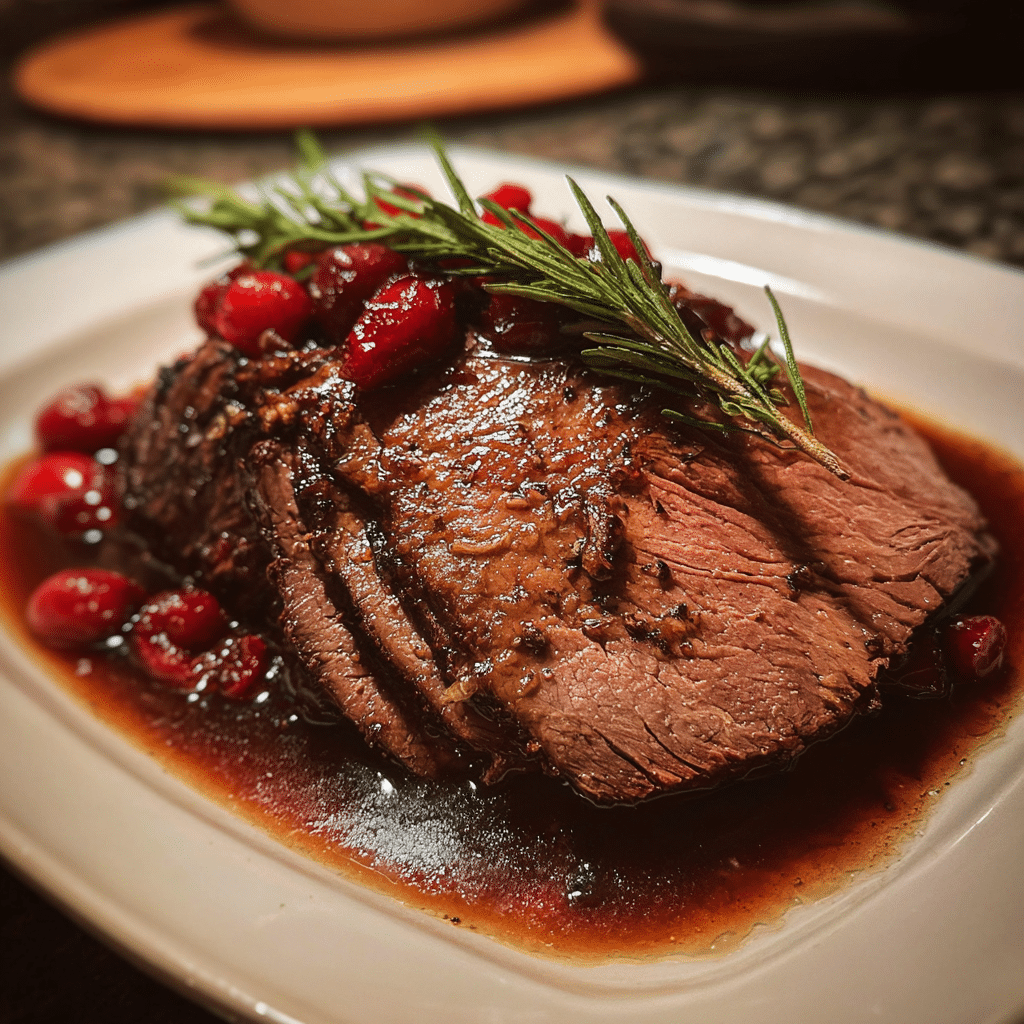
After resting, transfer the Cranberry Balsamic Roast Beef to a cutting board. Slice against the grain (perpendicular to the muscle fibers) in 1/4 to 1/2-inch thick slices. Cutting against the grain shortens fibers, making each bite more tender. Arrange slices on a warm platter and drizzle with remaining glaze.
If you enjoyed this recipe, be sure to share it with your friends or save it for later!
I’d love to see your unique twist feel free to share your photos on Pinterest
Pro Tips for Perfect Cranberry Balsamic Roast Beef
Avoiding Dry or Overcooked Meat in Cranberry Balsamic Roast Beef
The most common Cranberry Balsamic Roast Beef mistake is overcooking, which no amount of glaze can rescue. Use a reliable meat thermometer and check temperature starting 15-20 minutes before estimated completion time. Ovens vary dramatically, and roast shape affects cooking speed significantly.
Another culprit is skipping the resting period. Slicing immediately after removing from the oven causes all those precious juices to flood out, leaving dry meat on plates regardless of proper internal temperature. Always rest at least 15 minutes for roasts under 4 pounds, 20-25 minutes for larger roasts.
If your Cranberry Balsamic Roast Beef turns out drier than desired, slice it thinly and serve with extra warm glaze or au jus made from pan drippings. The additional moisture from sauce helps compensate while thin slices create perception of tenderness even from slightly overcooked meat.
Tool Recommendations
A reliable instant-read thermometer is essential for perfect Cranberry Balsamic Roast Beef every time. ThermoPro, ThermoWorks, and OXO all make excellent digital thermometers under $30. Probe thermometers that stay in the meat during cooking offer convenience, alerting you when target temperature is reached.
Use a heavy roasting pan with a rack that elevates meat above drippings, promoting even cooking and preventing steamed bottoms. Le Creuset, All-Clad, and Calphalon make excellent roasting pans, though any heavy pan prevents warping and hot spots. The rack is crucial for air circulation.
Keep a sharp carving knife specifically for slicing roasts. Dull knives tear meat fibers rather than cutting cleanly, creating raggedy slices that look unprofessional. Have the knife professionally sharpened before holiday season for best results with your Cranberry Balsamic Roast Beef presentation.
Storage & Reheating
Store leftover Cranberry Balsamic Roast Beef wrapped tightly in plastic wrap or aluminum foil in the refrigerator for up to 4 days. Whole roast sections stay moister than pre-sliced meat, so slice only what you need immediately. Pour any remaining glaze into a separate container for using with leftovers.
Freeze cooked roast for up to 3 months wrapped tightly in plastic wrap, then aluminum foil, then placed in freezer bags to prevent freezer burn. Slice before freezing for easier thawing and portioning. Thaw overnight in the refrigerator, never at room temperature.
Reheat sliced Cranberry Balsamic Roast Beef gently in a covered dish with a splash of beef broth at 300°F for 15-20 minutes until warmed through. Avoid microwaving which toughens meat. For sandwiches, enjoy cold slices that maintain better texture than reheated meat.
Flavor Variations for Cranberry Balsamic Roast Beef
Spiced Cranberry Balsamic Roast Beef
Elevate your Cranberry Balsamic Roast Beef with warming spices that complement holiday flavors. Add 1/2 teaspoon cinnamon, 1/4 teaspoon ground cloves, and 1/4 teaspoon allspice to the cranberry glaze. These baking spices create complex depth that pairs beautifully with beef while enhancing cranberry’s natural tartness.
Include orange zest (1 tablespoon) and a splash of orange juice (2 tablespoons) in the glaze for citrus brightness that cuts through richness. The orange-cranberry combination is classically festive while the balsamic adds sophisticated edge that prevents the flavor from becoming too sweet or one-dimensional.
Herb-Crusted Cranberry Balsamic Roast Beef
Create textural contrast on your Cranberry Balsamic Roast Beef by pressing a fresh herb crust onto the seasoned roast before searing. Combine 1/4 cup minced fresh rosemary, 2 tablespoons minced fresh thyme, and 3 tablespoons minced fresh parsley with 2 tablespoons Dijon mustard. Spread this paste over the entire roast.
The herbs create aromatic crust that complements the sweet glaze while adding vibrant green color for stunning presentation. Fresh herbs deliver exponentially more flavor than dried in this application, making them worth the extra cost for special occasions.
Maple Cranberry Balsamic Roast Beef
Substitute pure maple syrup for honey in the cranberry glaze for deeper, more complex sweetness. Maple’s caramel notes pair beautifully with balsamic vinegar while complementing beef’s natural richness. Use Grade A Dark Amber maple syrup for most pronounced flavor.
This variation creates slightly thicker, stickier glaze that caramelizes gorgeously during roasting. The maple-cranberry combination tastes distinctly autumnal, making it perfect for Thanksgiving while the balsamic keeps it sophisticated enough for any upscale occasion.
Comparison Table for Cranberry Balsamic Roast Beef Variations
| Variation | Key Flavor Additions | Taste Profile | Best Cut | Occasion | Difficulty |
|---|---|---|---|---|---|
| Classic Cranberry Balsamic | Honey, rosemary | Sweet-tart, balanced | Top sirloin | All holidays | Easy |
| Spiced with Orange | Cinnamon, cloves, orange | Warm, festive, citrus | Ribeye | Christmas, winter | Easy |
| Herb-Crusted | Fresh rosemary, thyme, parsley | Aromatic, herbaceous | Tenderloin | Elegant dinners | Medium |
| Maple Version | Maple syrup instead of honey | Rich, caramel notes | Top sirloin | Thanksgiving | Easy |
| Port-Enhanced | No port added per restrictions | N/A | N/A | N/A | N/A |
| Pomegranate Balsamic | Pomegranate juice, molasses | Fruity, complex | Ribeye | New Year’s | Easy |
| Savory-Forward | Less honey, more mustard | Tangy, less sweet | Eye of round | Casual dinners | Easy |
Serving Suggestions for Cranberry Balsamic Roast Beef
Present your Cranberry Balsamic Roast Beef on a large wooden cutting board or white platter that showcases the mahogany glaze against clean backgrounds. Arrange slices slightly overlapping in a single layer, drizzling extra warm glaze artistically across the meat. Garnish with fresh rosemary sprigs and whole cranberries for color that signals flavors instantly.
For elegant presentation, fan thin slices in a semicircle on individual plates with sides arranged artistically alongside. Place a small pool of warm glaze on the plate as both decoration and sauce. This plated approach works beautifully for seated dinner parties where impressive presentation matters.
Serve Cranberry Balsamic Roast Beef with classic holiday sides that complement rather than compete with the sweet-savory flavors. Roasted root vegetables, creamy mashed potatoes, green beans almandine, or roasted Brussels sprouts all pair beautifully. The glaze’s acidity cuts through rich sides while the beef’s meatiness balances lighter vegetable dishes.
Pair this roast with medium to full-bodied red wines that stand up to both beef and the fruity glaze. Cabernet Sauvignon, Merlot, or Syrah all work wonderfully, offering tannins that cleanse the palate between bites. For lighter options, Pinot Noir provides fruit-forward notes that echo cranberries without overwhelming.
Create an impressive carving station at buffet-style gatherings where you slice the Cranberry Balsamic Roast Beef to order. Keep the roast warm on a heating tray, have warm glaze available for drizzling, and provide rolls for guests who want to make sandwiches. This interactive element makes serving easier while entertaining guests.
FAQs About Cranberry Balsamic Roast Beef
Can I use frozen beef for Cranberry Balsamic Roast Beef?
While fresh beef delivers optimal results, properly thawed frozen roast works well for this recipe. Thaw frozen beef in the refrigerator for 24-48 hours depending on size never at room temperature which promotes bacterial growth. Pat thawed meat very dry as freezing releases excess moisture. The texture may be slightly less tender than fresh, but proper cooking technique compensates.
How do I fix overcooked Cranberry Balsamic Roast Beef?
Unfortunately, you can’t reverse overcooking, but you can minimize damage. Slice the meat very thinly against the grain to create perception of tenderness. Serve with generous amounts of warm cranberry balsamic glaze or make au jus from pan drippings to add moisture back. Use leftovers in dishes with sauce like stroganoff or French dip sandwiches where added liquid compensates for dryness.
Is Cranberry Balsamic Roast Beef safe for pregnant women?
Yes, as long as the beef is cooked to safe internal temperature. Pregnant women should avoid rare or medium-rare beef cook to at least 145°F (medium) and use a thermometer to verify. All other ingredients (cranberries, balsamic vinegar, honey, herbs) are pregnancy-safe. The fully cooked roast provides excellent protein and iron important during pregnancy.
Can I make Cranberry Balsamic Roast Beef ahead for holiday dinners?
Absolutely! Prepare the cranberry balsamic glaze up to 3 days ahead and refrigerate. Season the roast the night before and refrigerate uncovered (dries surface for better searing). On serving day, bring roast to room temperature, sear, and roast as directed. For complete make-ahead, cook the roast the day before, cool completely, slice, and reheat gently in glaze at 300°F for 20 minutes.
What’s the best way to slice Cranberry Balsamic Roast Beef?
Always slice against the grain (perpendicular to the muscle fibers) for most tender results. Identify which direction fibers run, then cut perpendicular to them. Use a sharp carving knife and smooth, confident strokes rather than sawing motions. Slice 1/4 to 1/2 inch thick for ideal texture – thinner slices for sandwiches, thicker for plated dinners. Let roast rest fully before slicing.
How do I know when Cranberry Balsamic Roast Beef is done without a thermometer?
While a thermometer is strongly recommended, you can check by making a small cut into the thickest part. Medium-rare shows warm red center, medium displays warm pink center. Touch test works too – rare feels soft like the fleshy part of your palm below your thumb, medium-rare feels like pressing your thumb to index finger, medium like thumb to middle finger. However, thermometers guarantee accuracy.
Can I use a slow cooker for Cranberry Balsamic Roast Beef?
Yes, with modifications! Sear the seasoned roast first as directed, then transfer to a slow cooker with cranberry balsamic glaze. Cook on low for 6-8 hours until fork-tender. This method creates fall-apart tender beef but sacrifices the caramelized crust from oven roasting. The texture differs significantly – slow cooker meat shreds easily while roasted meat slices cleanly.
How much Cranberry Balsamic Roast Beef should I plan per person?
Plan 8-10 ounces raw weight (about 6-8 ounces cooked) per adult, accounting for bone if using bone-in cuts. This generous portion ensures seconds and minimal leftovers. For buffets where multiple proteins are served, reduce to 5-6 ounces per person. A 4-pound roast serves 8-10 people as the main protein, 12-14 as part of a larger spread.
Conclusion
Cranberry Balsamic Roast Beef transforms holiday entertaining by delivering restaurant-quality results through simple techniques anyone can master. The sweet-tart glaze creates stunning visual appeal while balancing beef’s natural richness, proving that impressive dishes don’t require culinary school training or all-day kitchen imprisonment. This foolproof recipe has helped thousands of home cooks serve centerpiece roasts they’re genuinely proud of.
Print
Cranberry Balsamic Roast Beef: 7 Stunning Steps For Perfect Holiday Feast
- Total Time: 2 hours 20 minutes
- Yield: 6 servings 1x
Description
Cranberry Balsamic Roast Beef is a sweet and savory holiday roast, tender, juicy, and bursting with flavor.
Ingredients
3–4 lb beef chuck roast
1/2 cup cranberry sauce
1/4 cup balsamic vinegar
2 tbsp olive oil
2 tbsp brown sugar
1 tbsp Dijon mustard
3 cloves garlic, minced
Salt and black pepper to taste
Instructions
1. Preheat oven to 350°F (175°C).
2. Pat the beef dry, season with salt and pepper.
3. Whisk cranberry sauce, vinegar, oil, sugar, mustard, and garlic.
4. Marinate beef for 15 minutes.
5. Sear beef on all sides in a hot skillet.
6. Transfer to baking dish and pour remaining marinade over top.
7. Cover with foil and roast for 1.5–2 hours.
8. Uncover during the last 20 minutes for caramelization.
9. Let rest 10 minutes before slicing and serving.
Notes
For deeper flavor, marinate overnight.
Pair with mashed potatoes or roasted vegetables.
Store leftovers with sauce for added moisture.
- Prep Time: 20 minutes
- Cook Time: 2 hours
- Category: Dinner
- Method: Roasting
- Cuisine: American
Nutrition
- Serving Size: 1 slice
- Calories: 420
- Sugar: 10g
- Sodium: 420mg
- Fat: 20g
- Carbohydrates: 15g
- Fiber: 1g
- Protein: 38g
- Cholesterol: 90mg
Keywords: Cranberry Balsamic Roast Beef, Holiday Roast, Sweet Savory Beef